
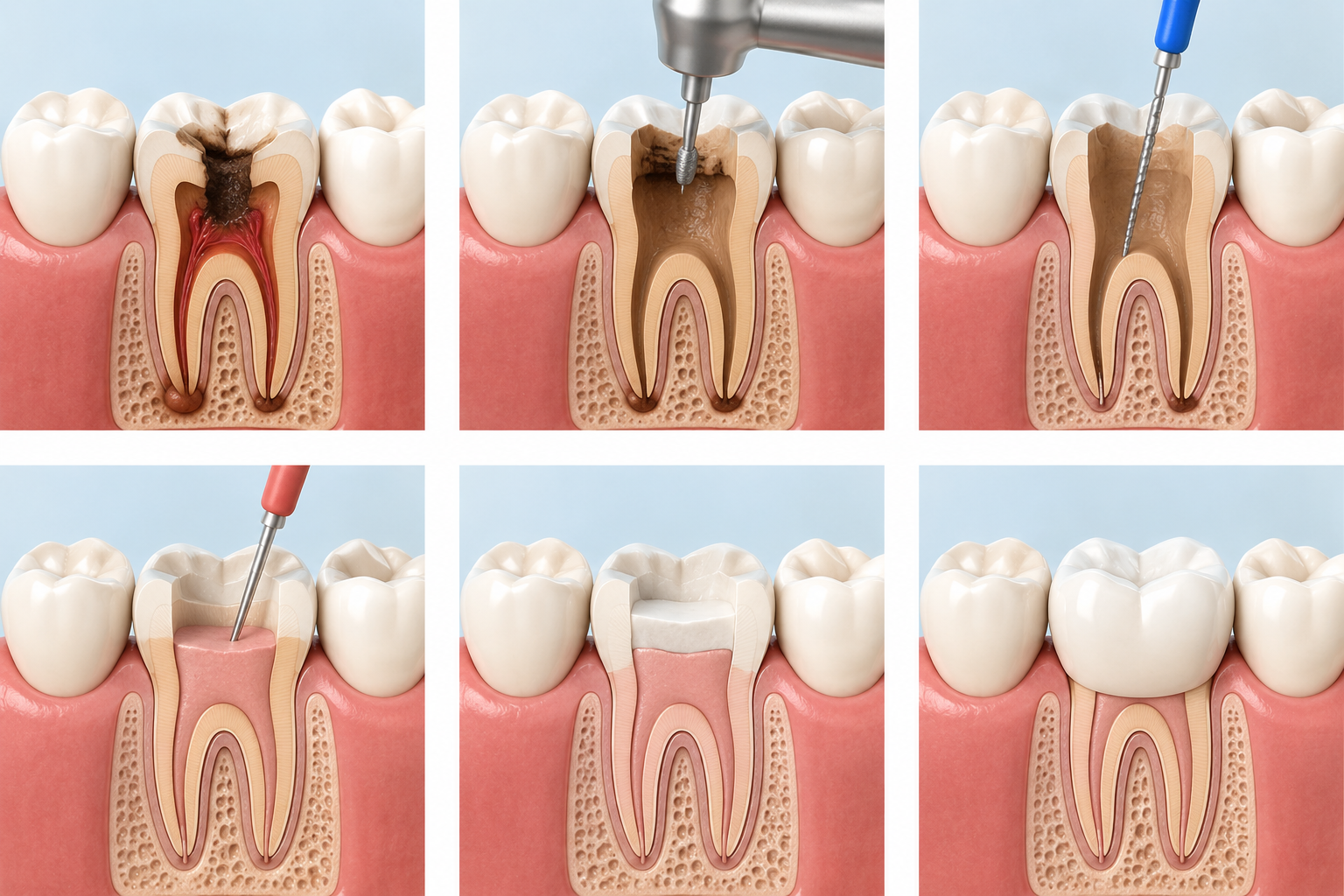
What Happens During a Root Canal Procedure? A Step-by-Step Guide
The mention of a root canal may cause many individuals to become uneasy; however, contemporary root canal therapy is a safe and pain-free procedure meant to save a patient’s teeth. Root canals allow a dentist to remove any infections from the soft tissue of teeth, alleviate pain, and ensure that there is no need for extracting the teeth.
In order to better understand the process of getting a root canal, it is important to know about all the aspects of the treatment. Here is an overview of the procedure and its purpose.
Table of Contents
- What Is a Root Canal Procedure?
- Why Is a Root Canal Needed?
- Common Signs You May Need a Root Canal
- Step-by-Step Guide to a Root Canal Procedure
- Does a Root Canal Hurt?
- Recovery After Root Canal Treatment
- Benefits of Root Canal Therapy
- How Long Does a Root Canal Take?
- Tips for Maintaining a Treated Tooth
- Conclusion
- Frequently Asked Questions
- Call to Action
What Is a Root Canal Procedure?
Root canal therapy is a dental procedure involving the removal of the decayed pulp from inside the tooth. Pulp consists of nerves, blood vessels, and connective tissues responsible for the development of the tooth. However, once the tooth reaches full maturity, the absence of pulp will not hinder its normal functions.
In this procedure, the dentist removes the decaying tissue, cleans and disinfects the canals, then seals the tooth to prevent further infection.
Many patients seeking rootcanal treatment in kottayam choose this procedure because it allows them to save their natural teeth rather than undergo extraction.
Why Is a Root Canal Needed?
A root canal becomes necessary when bacteria enter the pulp and cause infection or inflammation. This can happen due to:
- Deep tooth decay
- Cracked or chipped teeth
- Repeated dental procedures on the same tooth
- Severe tooth injuries
- Untreated cavities
Without treatment, the infection can spread, leading to increased pain, abscess formation, and possible tooth loss.
Common Signs You May Need a Root Canal
Early recognition of these signs can help avoid complications.
- Persistent Toothache – If you experience continuous pain while eating or at rest, then there is a chance of infected pulp.
- Hot or Cold Sensitivity – Sensitivity that persists after having food hot or cold may indicate infection.
- Inflamed Gums – Inflamed or tender gums around the tooth may show infection.
- Discolored Tooth – Darkened tooth color indicates internal damage.
- Dental Abscess – Formation of pus at the site of the tooth is an urgent concern.
Consulting an experienced Dentist in Kottayam can help determine whether root canal therapy is the appropriate solution.
Step-by-Step Guide to a Root Canal Procedure
Step 1: Examination and Diagnosis
The dentist begins by examining the affected tooth and reviewing symptoms. Digital X-rays are often taken to assess the extent of infection and evaluate the root canals.
A proper diagnosis ensures the most effective treatment plan.
Step 2: Local Anesthesia
To ensure patient comfort, local anesthesia is administered to numb the affected tooth and surrounding tissues.
Modern anesthesia techniques make root canal treatment comparable to receiving a routine dental filling.
Step 3: Placement of a Dental Dam
A small protective sheet called a dental dam is placed around the tooth.
This helps:
- Keep the treatment area dry
- Prevent contamination from saliva
- Improve visibility during the procedure
Step 4: Creating an Access Opening
A small opening is made in the crown of the tooth to access the infected pulp chamber and root canals.
Specialized instruments are used to perform this step with precision.
Step 5: Removal of Infected Pulp
The damaged pulp tissue is carefully removed from inside the tooth.
This step eliminates:
- Infection
- Bacteria
- Inflamed tissue
- Debris within the canals
Removing the infected pulp is essential for stopping pain and preventing further damage.
Step 6: Cleaning and Shaping of Root Canals
Once the pulp is eliminated, cleaning and disinfection of root canals are performed.
The shaping of root canals helps to prepare them for the procedure of filling.
Thanks to advanced technology, dentists nowadays have special equipment that allows them to reach all areas of the root canal system.
Step 7: Root Canals Filling
Cleaning root canals help to remove any debris left inside them.
They are filled with biocompatible substance – gutta-percha.
Gutta-percha fills the canals and blocks the entry of bacteria into them.
Step 8: Tooth Sealing
Temporary or permanent filling is applied for closure of an access cavity.
Step 9: Installation of Crown
The crown:
- Restores strength
- Improves function
- Protects the tooth from fractures
- Enhances appearance
Patients receiving rootcanal treatment service in kottayam are often advised to complete the crown placement process to maximize long-term success.
Does a Root Canal Hurt?
The main misconception concerning root canal treatment is that it is very painful.
However, the fact is that a root canal does not involve any pain but rather relieves patients from it due to recent technological developments in dentistry. Most patients do not feel anything due to local anesthetics, except for mild sensitivity that subsides on its own.
Recovery After Root Canal Treatment
Recovery is typically straightforward.
Patients should:
- Avoid chewing on the treated tooth until fully restored
- Follow prescribed medications if needed
- Maintain good oral hygiene
- Attend follow-up appointments
- Contact the dentist if unusual pain or swelling occurs
Most people return to normal activities shortly after treatment.
Benefits of Root Canal Therapy
- Maintains Natural Teeth – Retention of natural teeth is important to ensure proper chewing and jaw alignment.
- Alleviates Pain – The treatment process eliminates the cause of pain.
- Avoids Tooth Extraction – A root canal treatment cures the infection without having to remove the natural teeth.
- Enhances Oral Health – Elimination of bacteria prevents spreading of infection to other areas of the mouth.
- Ensures Lasting Teeth – The treated and restored teeth can remain healthy for a very long time.
An experienced endodontist in kottayam can provide specialized care for complex root canal cases and improve treatment outcomes.
How Long Does a Root Canal Take?
The duration of treatment depends on:
- The location of the tooth
- Number of root canals
- Severity of infection
- Complexity of the case
Most root canals can be completed in one or two appointments.
Tips for Maintaining a Treated Tooth
To maximize the lifespan of a root canal-treated tooth:
- Brush twice daily
- Floss regularly
- Schedule routine dental checkups
- Avoid chewing hard objects
- Wear a mouthguard if you grind your teeth
- Maintain a healthy diet
Good oral care helps protect both treated and natural teeth.
Conclusion
A root canal treatment is an excellent treatment option because it allows you to save your infected tooth while alleviating pain. Although undergoing a root canal treatment might sound scary at first, having knowledge about all its steps will help you feel better about the whole process.
Due to advanced dental methods, a root canal treatment can be quite successful. It can also serve as a good method for preserving your own natural teeth.