
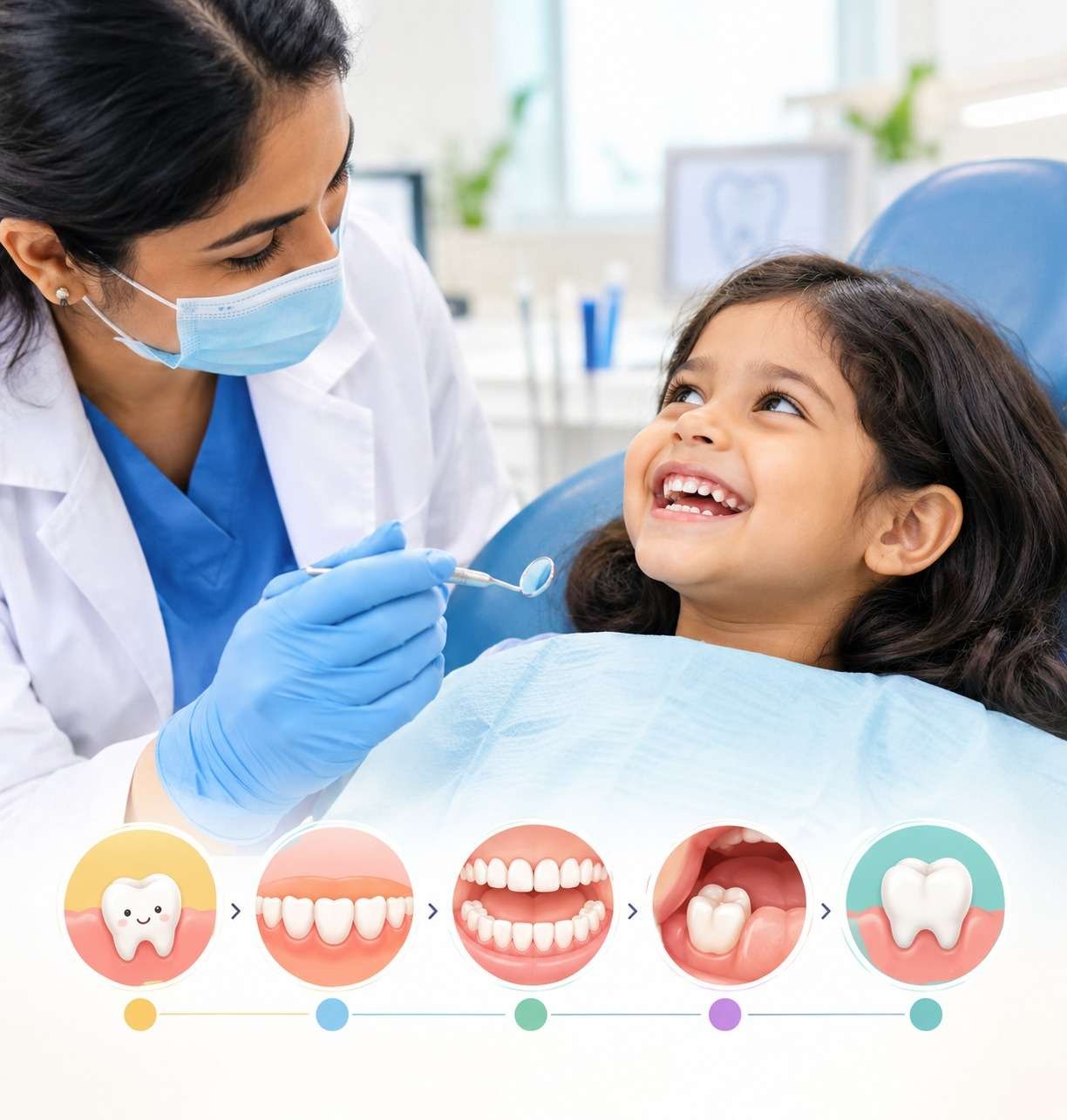
From First Tooth to First Molar: Key Milestones in a Child’s Dental Development
The development of the oral cavity in children begins even before the arrival of their first tooth. From the emergence of the first baby tooth to the appearance of the first permanent molar, every stage of children’s dentition is important. Knowing about all the stages of oral development can help parents understand any changes from the normal development and help consult specialists on time. A visit to the Best Dental Clinic in Kottayam will help determine the current level of children’s dentition and prevent further possibly problems.
Table of Contents
- When Does a Baby’s First Tooth Appear?
- The Development of Baby Teeth
- What Happens Around Age 3?
- The Arrival of the First Permanent Molar
- Why Dental Checkups Matter During Development
- How Parents Can Support Healthy Dental Development
- When Should Parents Consult a Dentist?
- Conclusion
- FAQ
When Does a Baby’s First Tooth Appear?
Most children start teething at about six months old. However, this can vary between kids, so some may start as early as 5 months or even later in their first year.
The first teeth to come in are the central incisors at the bottom of the baby’s mouth. Parents can tell that their child is teething due to extra drool, desire to chew on things, or soreness around the gums.
Once teeth begin to erupt, brushing them regularly with a soft toothbrush will keep plaque off the surfaces and help kids get used to taking care of their teeth.
The Development of Baby Teeth
Children have a set of 20 primary teeth that usually come out between infancy and about three years. The order of eruption is typically:
- Lower and upper central incisors
- Lateral incisors
- First molars
- Canines
- Second molars
Baby teeth are essential in children’s lives, even though they will eventually fall out and be replaced by permanent teeth. They enable a child to eat properly, speak clearly, and hold space for the adult teeth. Parents should not neglect cavities in their children’s primary teeth because decayed and damaged baby teeth can lead to discomfort, negatively affect the quality of life, and adversely affect general health.
A pediatric dentist can assess the condition of the primary teeth and address the problems during checkups.
What Happens Around Age 3?
By around age three, many children are already growing most or all of their 20 primary teeth. At this age, it is very important to maintain a good oral hygiene routine.
Children should be taught to brush their teeth twice every day with an age-appropriate amount of fluoride toothpaste. Parents may need to help them brush until they have better motor control to clean all of their teeth.
This is also a good time for parents to be on the lookout for harmful habits like thumb sucking or pacifier use that could affect the alignment and spacing of the teeth or jaw structure.
Dental checkups can help monitor these changes and help parents identify what they can do to support their children at home.
The Arrival of the First Permanent Molar
One of the most important events that occur at the age of six is the eruption of the first permanent molar. The first permanent molars erupt behind the existing baby molars and should not be confused with the baby teeth because they are permanent.
Since these teeth are permanent, their proper care should begin immediately after the eruption. Due to their location, they might be hard to reach for a child; that is why parents should ensure that their children brush their teeth thoroughly.
The dentist can discuss other preventive treatments, such as dental sealants. The eruption of the first permanent molars is an essential stage in the transition from primary to permanent teeth.
Why Dental Checkups Matter During Development
The oral cavity of a child is constantly changing, so regular dental examinations allow professionals to track eruption, detect decay at an early stage, and study how the jaws and bite are formed.
Professional assistance is most needed in the case of delayed tooth eruption, atypical positions of the teeth, persistent discomfort, and other problems.
Choosing the right pediatric dentistry kottayam will provide an opportunity to receive quality care for a child, which is highly recommended for proper oral hygiene. Moreover, it becomes possible to respond to concerns in time, preventing them from becoming serious.
How Parents Can Support Healthy Dental Development
Parents have a fundamental role to play in taking care of their children’s oral health. The following are recommended family dental hygiene practices that parents should incorporate into their daily routines.
They should ensure that their child brushes their teeth two times a day.
The brushing should be done using toothpaste that is appropriate for the child’s age and dental development.Parents should also limit the consumption of foods and drinks that are high in sugar by their children.They should discourage them from going to bed with a bottle of sweetened liquid.
When Should Parents Consult a Dentist?
Do not wait for a dental emergency. Your child should see a dentist when the first tooth erupts and then continue with routine appointments. You should take your child to the dentist for tooth pain, a swollen jaw, cavities, a discolored tooth, difficulty chewing, unusual eruption of teeth, or an injury to the mouth. Parents should help their children brush their teeth and develop good oral hygiene habits.
Conclusion
From the first baby tooth to the first permanent molar, each step is important in the development of a child’s dentition. Being aware of the expected developments and how to take care of them is essential for fostering a healthy smile.
Brushing, flossing, and maintaining a balanced diet are important aspects of children’s dental care. Parents must provide them with proper oral hygiene practices and encourage them to visit the dentist regularly.