
Dental Implants: A Comprehensive, Structured Approach to Tooth Replacement
Dental implants have redefined the way missing teeth are replaced by focusing on restoring both function and structure rather than just appearance. Unlike traditional methods that depend on neighbouring teeth for support, implants are designed to work independently by integrating directly with the jawbone. This approach ensures stability, preserves surrounding teeth, and supports long-term oral health. By replacing the root as well as the visible portion of the tooth, implant dentistry offers a solution that closely resembles natural teeth in both performance and feel.
Consulting a qualified Dentist in Kottayam ensures reliable treatment for restoring missing teeth with long-term stability and function
Hi-klean provides this with precision-driven care and advanced implant solutions.
Table of Contents
- Concept of Implant-Based Tooth Replacement
- Structural Composition and Material
- Implant-Supported Restorative Options
- Full Mouth Rehabilitation with Implants
- Treatment Phases and Healing Process
- Functional Integration and Bone Preservation
- Long-Term Performance and Maintenance
- Conclusion
- FAQs
Concept of Implant-Based Tooth Replacement
A dental implant is a replacement for a missing tooth; however, there is much more to it than that. It replaces the tooth root, which is crucial for keeping the jaw healthy and providing proper function. When dealing with bridges in regular treatments, the two adjacent teeth have to be shaved to provide space for artificial crowns, whereas dental implants do not require any adjacent tooth to be shaved. This allows each tooth to function independently without affecting other teeth.
It is important to highlight that this method provides excellent results when it comes to ensuring that your teeth remain straight and do not experience any additional pressure from neighbouring teeth.
Structural Composition and Material
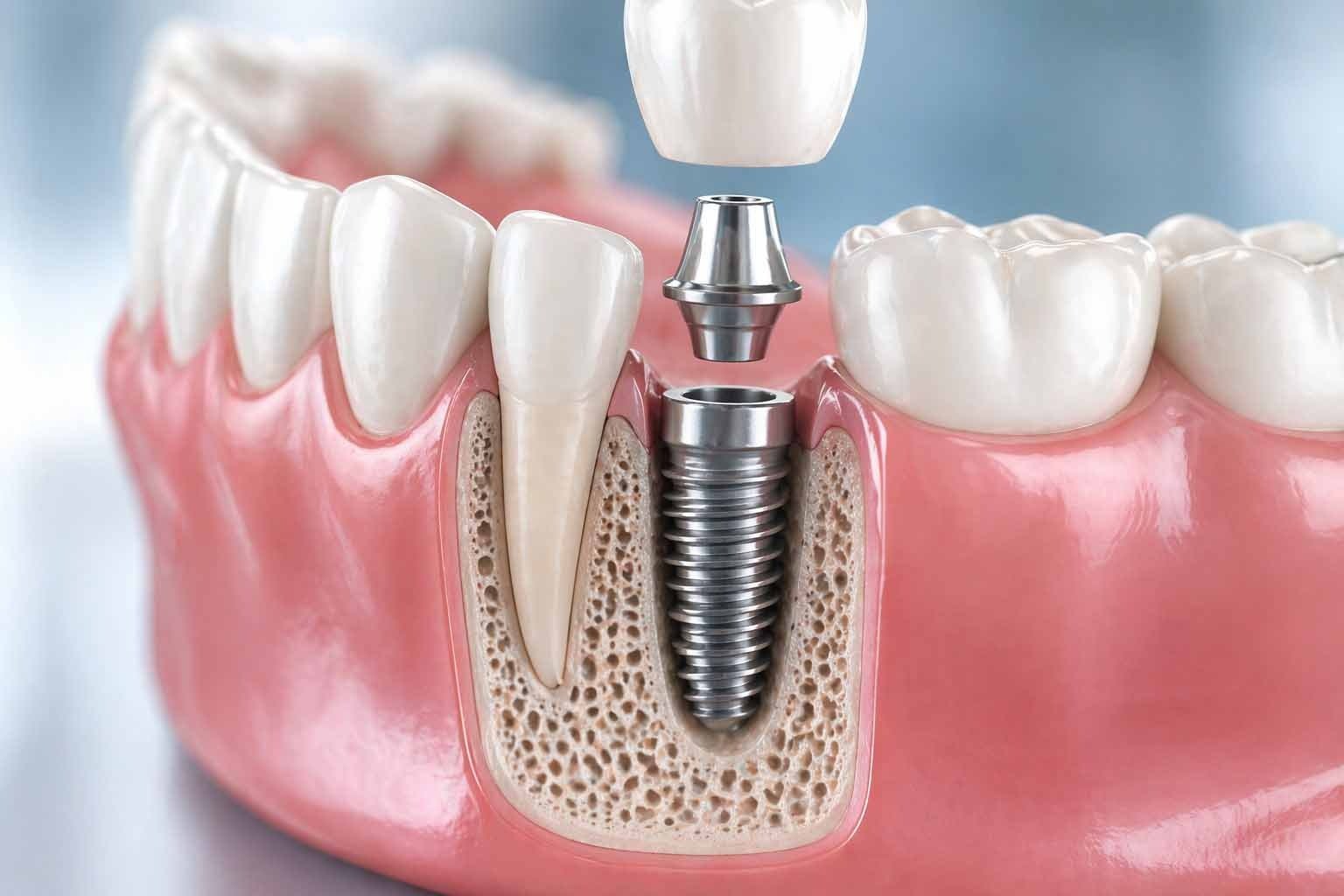
The design of a dental implant is based on precision and compatibility with the human body. The implant itself is typically made of titanium, a material known for its strength and biocompatibility. Once placed in the jawbone, it gradually bonds with the bone through a natural biological process, creating a stable foundation.
This integration allows the implant to support a prosthetic tooth such as a crown or bridge. The visible part of the restoration is carefully designed to match the shape, size, and colour of natural teeth, ensuring a seamless appearance. The combination of structural strength and aesthetic adaptability makes implants a reliable option for long-term tooth replacement.
Implant-Supported Restorative Options
Dental implants can be customized according to the amount of tooth loss, offering a flexible dental solution. If only one tooth is missing, only one dental implant can be installed, which supports a single crown that will replace the missing tooth, without having to affect neighboring teeth. If there is more than one tooth missing, implants can serve as supporting structures for bridgeworks.
In cases where a patient has lost all of his or her teeth, dental implants can be used to stabilize dentures, offering a more permanent solution than traditional dentures. The use of dental implants offers flexibility when it comes to accommodating a variety of conditions, while still delivering consistent results.
Full Mouth Rehabilitation with Implants
When all the teeth are missing from the oral cavity, the implant system provides a systematic approach to restoring an individual’s entire set of teeth. An implant system offers a fixed denture that does not affect chewing capabilities and does not disrupt the sense of taste as compared to conventional removable dentures.
An additional consideration includes the retention of bone in the oral cavity. In case of missing teeth, the bone resorbs due to lack of functionality, but implants contribute toward maintaining the bone mass through force transmission
Treatment Phases and Healing Process
The treatment process for dental implants is done in a step-by-step approach to ensure proper integration with surrounding tissues. First of all, the dentist places the implant in the jawbone using local anesthetic. The procedure is quite simple and is no different from any other oral surgery.
Then, the implant is given time to heal and integrate itself with the jawbone. This process is crucial and may take several months, with individual differences for upper and lower jaws.
After that, when the integration is complete, the artificial tooth is fixed to the implant to complete the rehabilitation process.
Functional Integration and Bone Preservation
The major benefits associated with dental implants include integration with the jawbone. Integration results in creating an immovable bond capable of supporting natural bite forces without any shifting. In contrast to dentures, implants do not move during eating and talking; therefore, patients may feel more confident while performing certain activities.
Another advantage offered by integration concerns prevention of bone tissue atrophy. As a result of tooth loss, the bone starts to atrophy because there is no more stimulation from the teeth. Dental implants perform root-like functions and ensure preservation of jaw bone integrity, preventing its aging and deterioration.
At HiKlean, we focus on precision-driven care, and We provides the best Dental implants service in Kottayam by ensuring proper implant placement and long-term stability through advanced techniques and careful planning.
Long-Term Performance and Maintenance
Dental implants are designed for durability and long-term use. With proper care, they can function effectively for many years. Maintenance is similar to that of natural teeth, involving regular brushing, flossing, and routine dental check-ups.
When considering dental implants treatment in Kottayam, it is important to understand that their longevity depends on factors such as oral hygiene, overall health, and adherence to professional care recommendations. When maintained properly, implants provide a stable and reliable solution that supports both function and aesthetics over time.
Conclusion
Dental implants represent a comprehensive solution for replacing missing teeth by restoring both structure and function. Their ability to integrate with the jawbone, preserve surrounding teeth, and provide long-term stability makes them a preferred choice in modern dentistry. The staged treatment process ensures proper healing and predictable outcomes, while the final restoration offers a natural look and feel.
For those seeking advanced implant care with a focus on precision and patient-centered treatment, Hiklean Dental Clinic provides comprehensive dental solutions, making it a trusted option for individuals looking for the best Dental Clinic in Kottayam.